Ordering topsoil is easy. Ordering the right amount, at the right depth, for the job you are actually doing is where most yards go wrong. Here is how we work it out for customers around Dayton.
Start With Cubic Yards, Not Bags
Topsoil is sold by the cubic yard. One cubic yard is a cube three feet on every side, or 27 cubic feet, and it covers about 100 square feet at three inches deep. Bagged soil from a garden center is usually 0.75 or 1 cubic foot per bag, so a single yard replaces 27 to 36 bags. For anything larger than a raised bed, bulk is the way to buy it.
The Math
Measure the length and width of the area in feet and multiply them for square feet. Decide on a depth in inches and divide by 12 to convert it to feet. Multiply square feet by depth in feet, then divide by 27. That is your cubic yards.
Example: a back lawn 40 feet by 30 feet is 1,200 square feet. At a 4-inch depth (0.33 feet), that is 400 cubic feet, or just under 15 cubic yards. Round up. Soil settles, and running short in the middle of a spread is worse than having a little left for the beds.
How Deep Should You Go?
- New lawn from seed: 4 to 6 inches of blended topsoil over graded subsoil. This is the depth grass needs to root deeply and survive an Ohio July.
- Sod: 3 to 4 inches, raked smooth and firmed.
- Overseeding or repairing thin spots: a quarter to half inch raked in, no more, or you bury the existing grass.
- Raised vegetable beds: fill the full depth of the bed, usually 8 to 12 inches, ideally blended with compost.
- Filling low spots: enough to bring the area to grade plus about 10 percent for settling, then topsoil over the top for seed.
When Topsoil Alone Will Not Fix It
A yard that holds water is not a topsoil problem; it is a grade or drainage problem. Piling soil on a wet spot moves the puddle a few feet. If water sits for more than a day after rain, the area needs to be regraded so it sheds water, or it needs a French drain to carry the water away. Our grading and leveling and drainage work pages explain both, and we can look at the yard when we deliver.
Delivery, Pickup and Placement
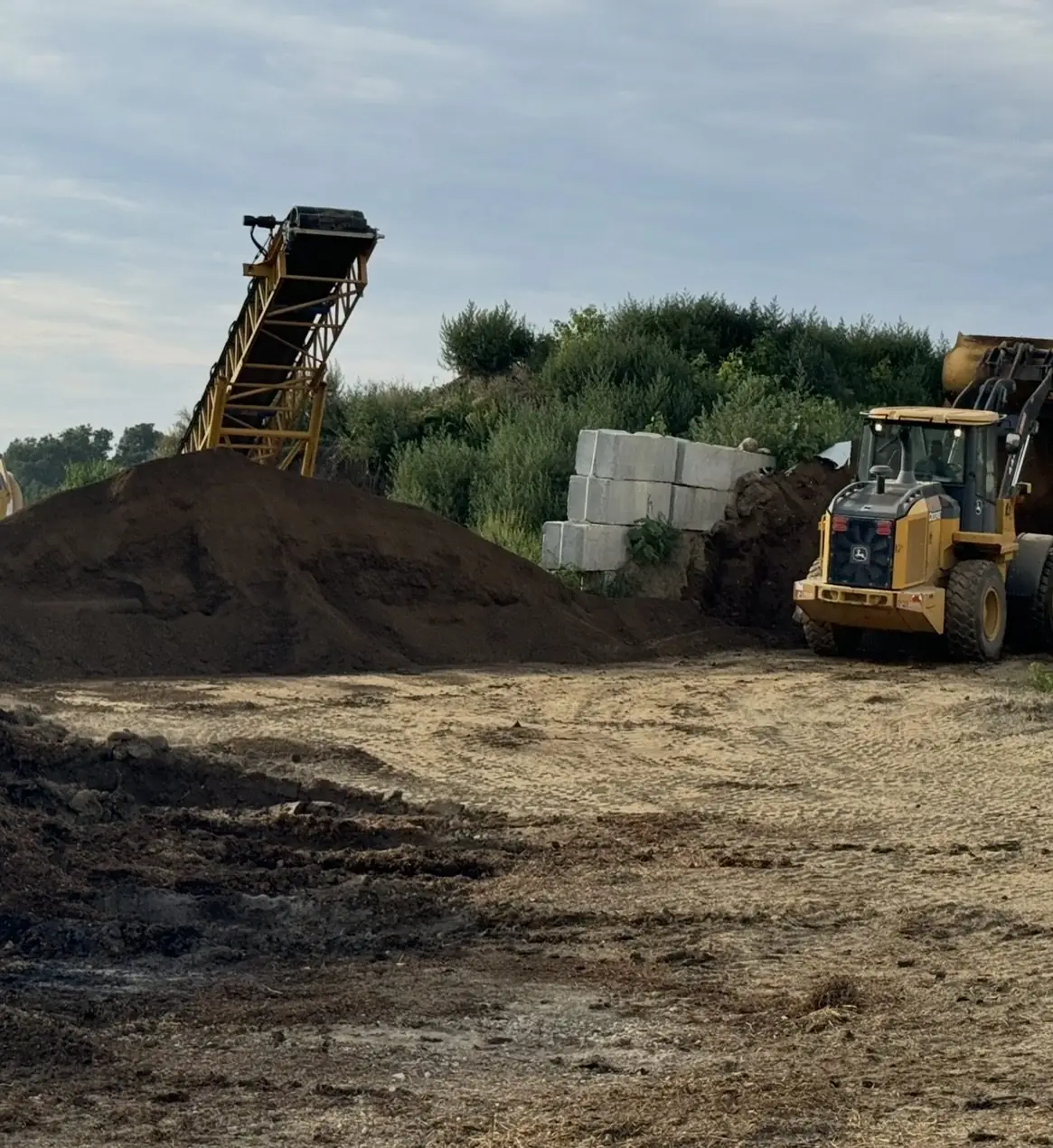
A single-axle dump truck load is a common order for a lawn project. For small jobs, pick up a scoop or two at our yard in West Alexandria with a truck or trailer. When we deliver, tell us where to drop the pile: close to the work, but on a surface that can take a truck and a heavy load. We can also spread and finish grade it with our own equipment, which saves a weekend of wheelbarrow work.
Why Blended Topsoil Matters
Not all topsoil is the same. Straight fill dirt is fine for building up grade but poor for growing anything. Our blended topsoil is processed to remove rock and clumps and mixed with organic material so it holds moisture and nutrients. Rodney Creech’s agronomy background shapes the blend, and it shows in how fast a new lawn fills in.
Still unsure how much you need? Measure the area, request a quote with the dimensions, or call (937) 313-2690 and we will work it out with you.